NEWS
Social
Noise Sessions - Noise as Metapher
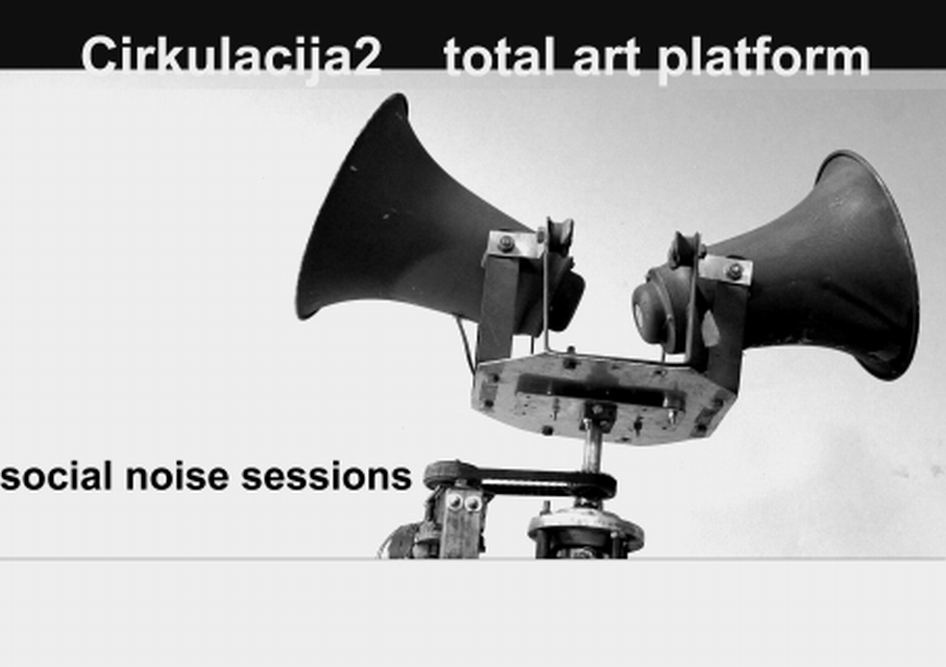
Cirkulacija2
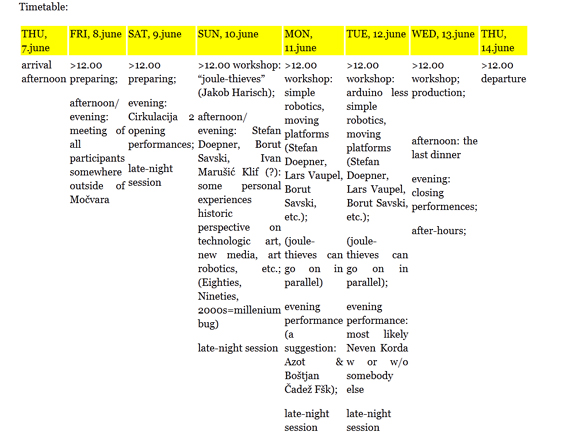
07. - 14. 06. 2012, Močvara Gallery
Coproduction: Cirkulacija 2 & Kontejner
Participants: Boštjan Leskovšek, Stefan Doepner,
Jakob Harisch, Lars Vaupel, Boštjan Čadež, Slavko Glamočanin,
Neven Korda, Borut Savski and colleagues from Zagreb: Azot, Ivan
Marušić Klif,
&
I’MM_ Media lab and as
special guests: 300.000 V.K
13.06. - ueber V.K. concert.
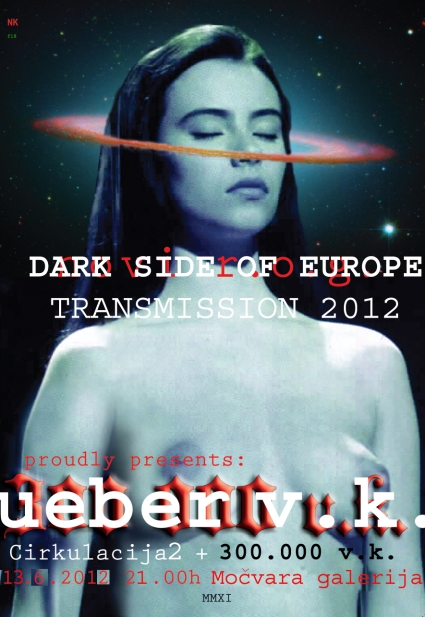
C2 + 300.000 V.K. = ueber V.K.
(Dejan Knez, Stefan Doepner, Tomo Božič, Urška Lipovž, Boštjan
Leskovšek)
300.000 V.K. historically: one of the by-products of Laibach – “the
noise section”.
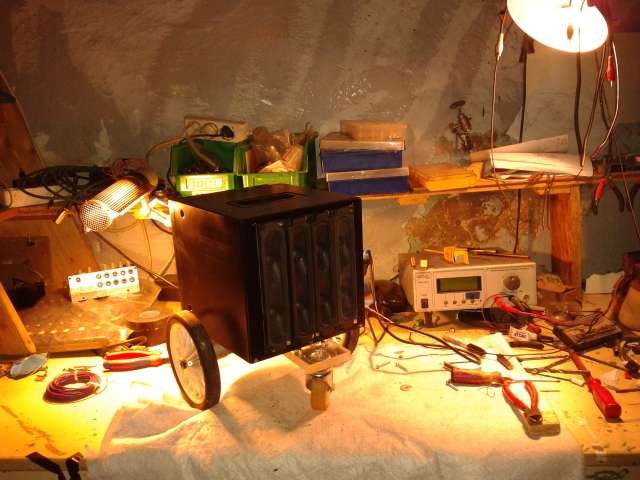
speakerBot protoype
projected features: sensor
controlled autonomous behaviour, active speakers, audio blue tooth,
audio minijack, infrared mode switch
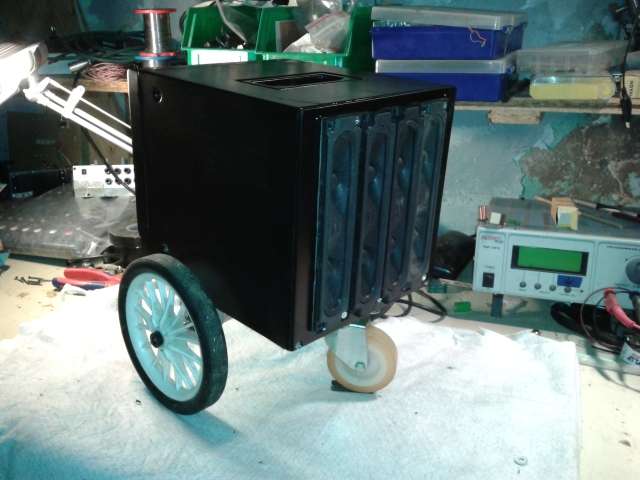
2012
Beyond
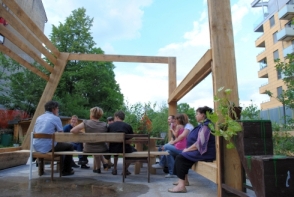
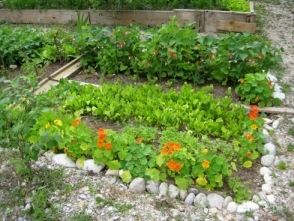
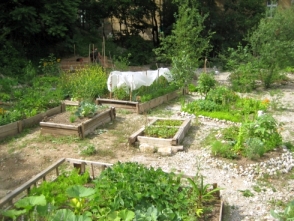
a Construction Site
an artist initiative project on
participation and urban planning by Kud
Obrat
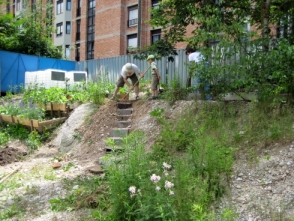
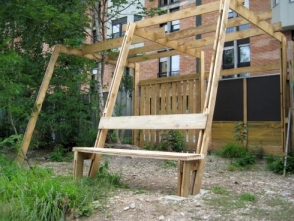
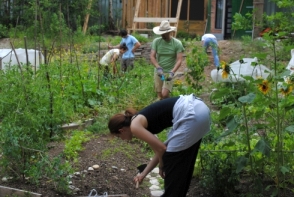
In collaboration with neighbourhood residents and other interested people, we are transforming a long-fenced-off plot of land
in Ljubljana into a community space intended for gardens, socializing, ecological projects, education, and culture.
2010 - 2012 ongoing
oakBass
e-bass guitar prototypes, handmade pick up, oak
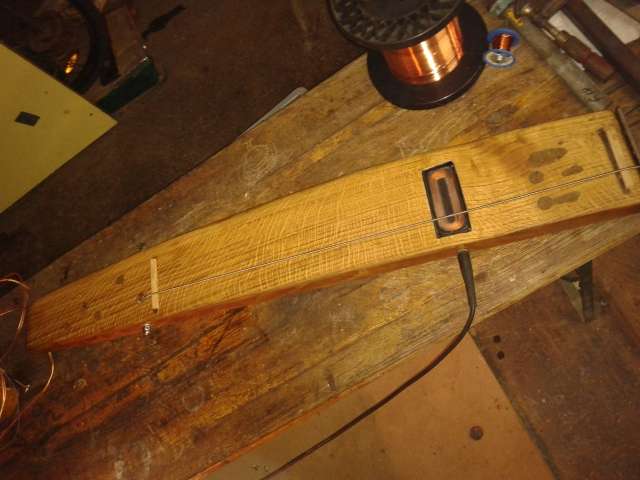
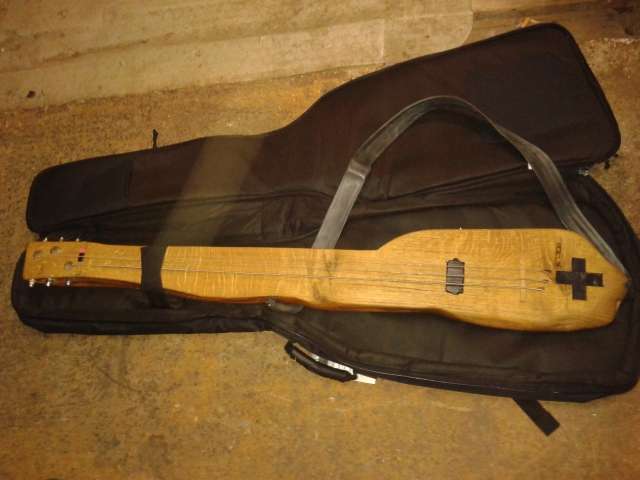
prototype1, computer controlled playing
devices are in development
prototype2 for Dejan Knez,
300.000 V.K. / Laibach
2012
concert with 300.000
V.K.
at dvorana ROG, Ljubljana, including turning
tweeter and oakBass
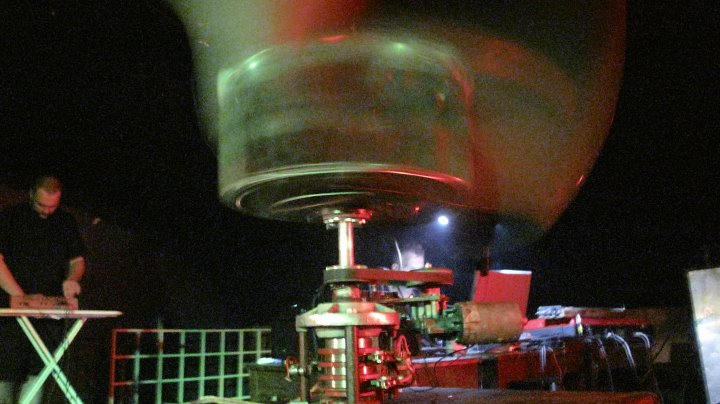
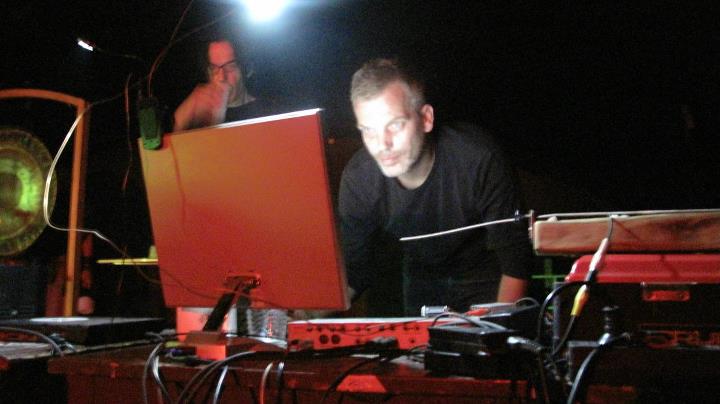
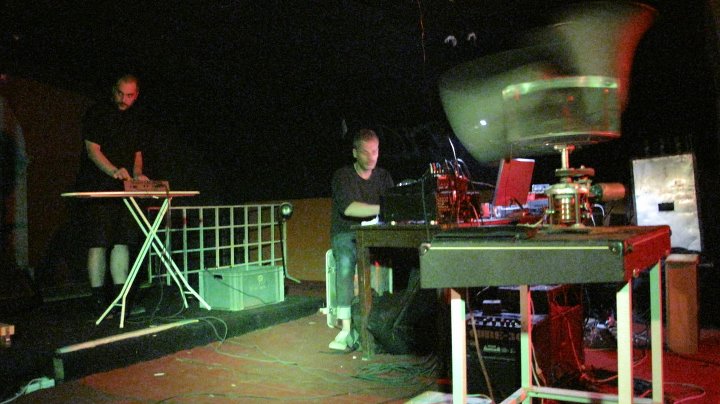
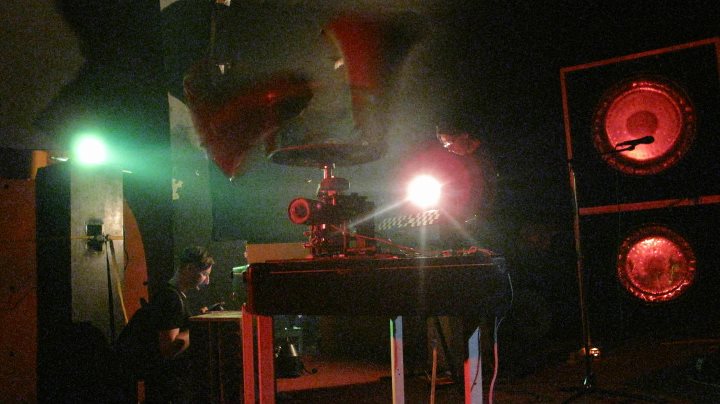
2011 (photos: Bostjan Leskovsek)
noiseBot 0.11
sensor controlled autonomous robot
soundplatform
ultrasonic sensors, drive sensors, infrared data receivers, active
speaker system
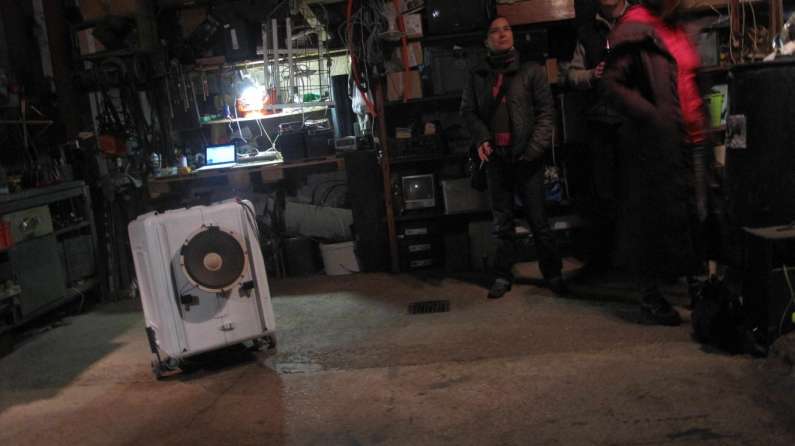
noisebot by Stefan Doepner is an autonomous robot sound platform. In contrast to prevalent sound systems,
which, by shooting sound, patronize the listener and imprison sound, noiseBot 0.11 does not "throw" sound from a
single, static point, but is a creative tool for dealing with sound in space in diverse ways. With moving in the space
and its own programmed behavior autonomous robot sound platform is a sound actor, which creates
a dynamic
sound space.
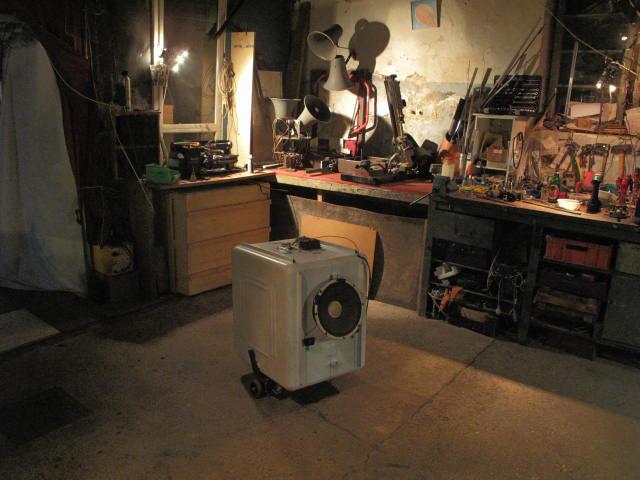
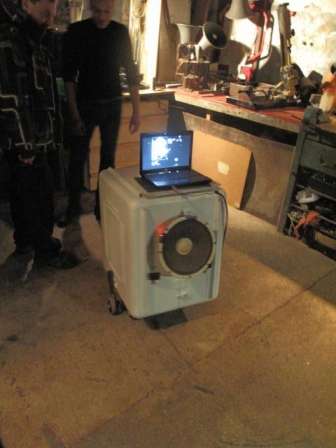
cirkualcija2, 2011 (photos: Bostjan Leskovsek)
mobile art platform
in cooperation with
Cirkulacija2
mobile art platform is a
pushcart with adjustable and extedable multi platform
for inter social media activities and interventions
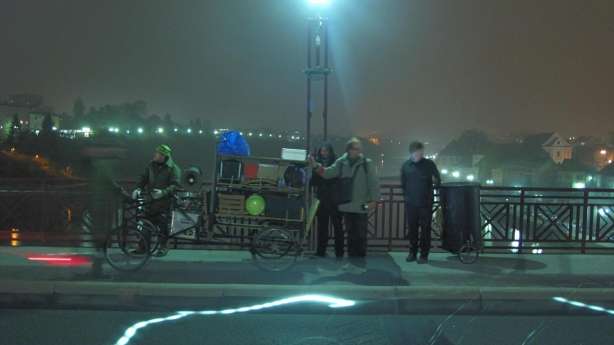
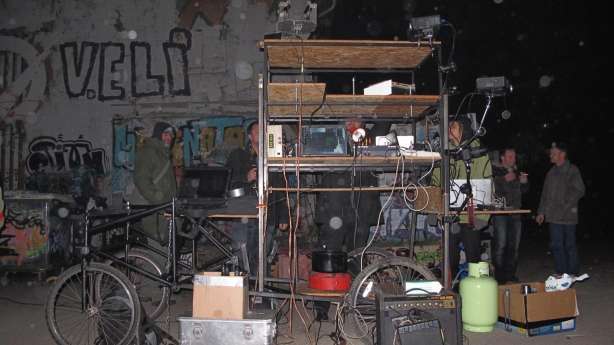
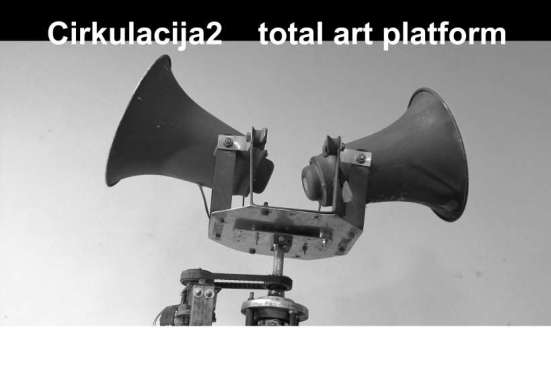
at mfru/kiblix festival 2011 (photos: Bostjan Leskovsek,
Doepner)
mobile sub woofer / turning tweeter
by Stefan Doepner
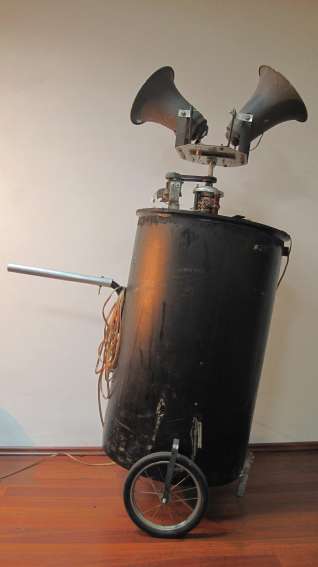
2011
related to:
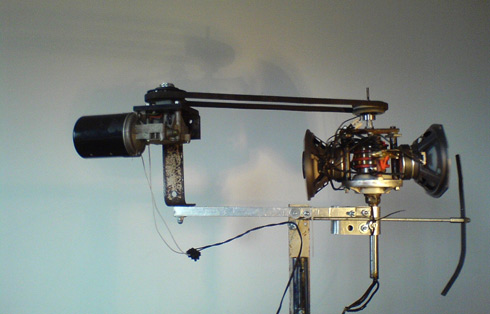 rotating speaker / microphone, 2008
midiPicknick, atm -
robotPartner 2.0 and smartist
by Stefan Doepner
at the Muzej Robotov exhibition, UGM Maribor
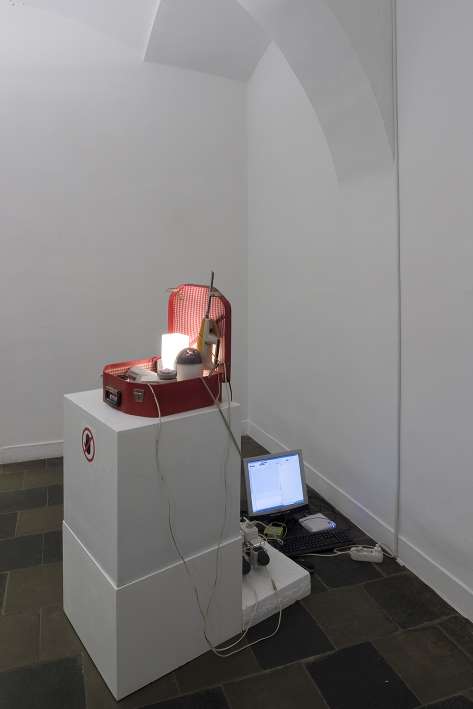
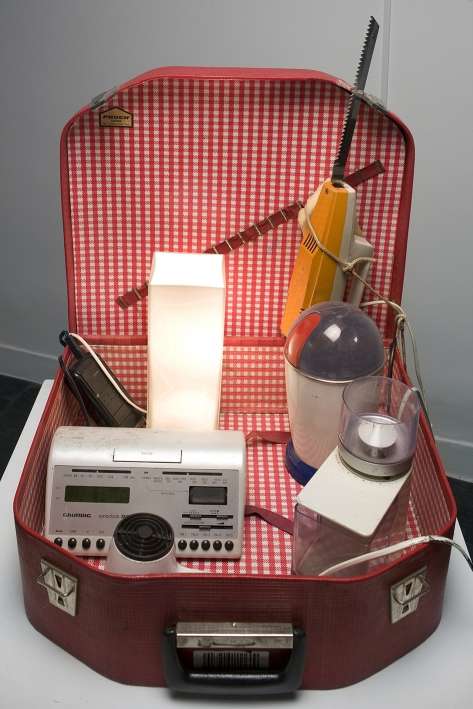
midiPicknick
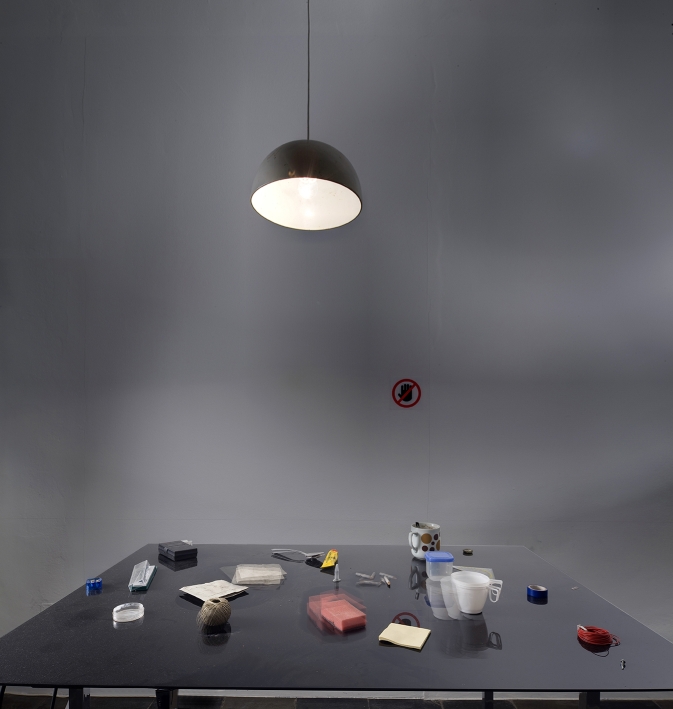
atm - robotPartner 2.0
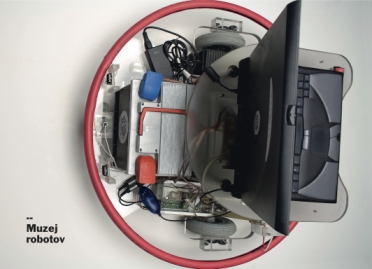
smartist, in cooperation with Nika Oblak and Primoz Novak
2011 (photos:
Damjan Švarc)
kleinerOskar
prototype of computer controlled string instrument
by Stefan Doepner
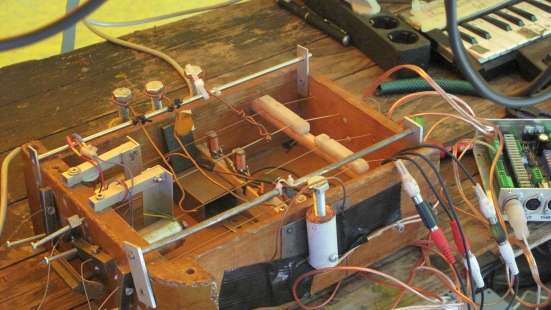
2011 (photo: Bostjan Leskovsek)
The Mechanical Book
Stefan Doepner in cooperation with Sanela Jahic
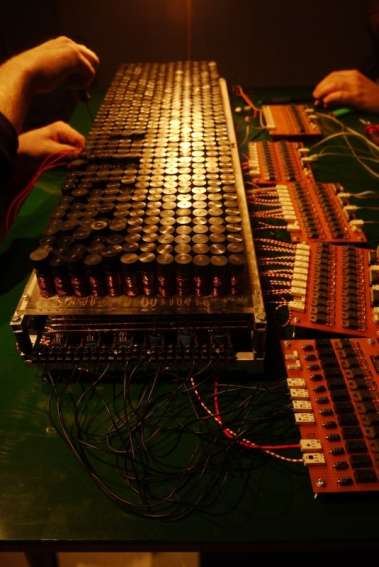
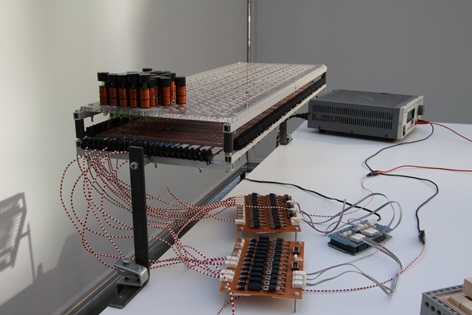
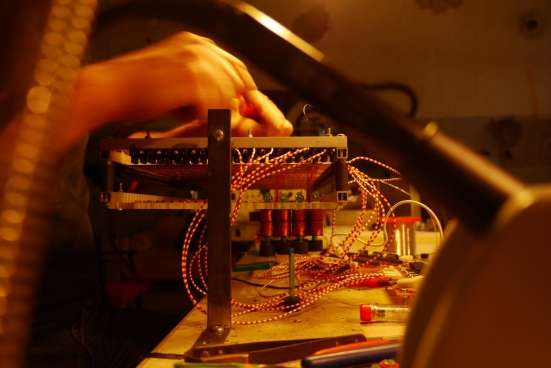
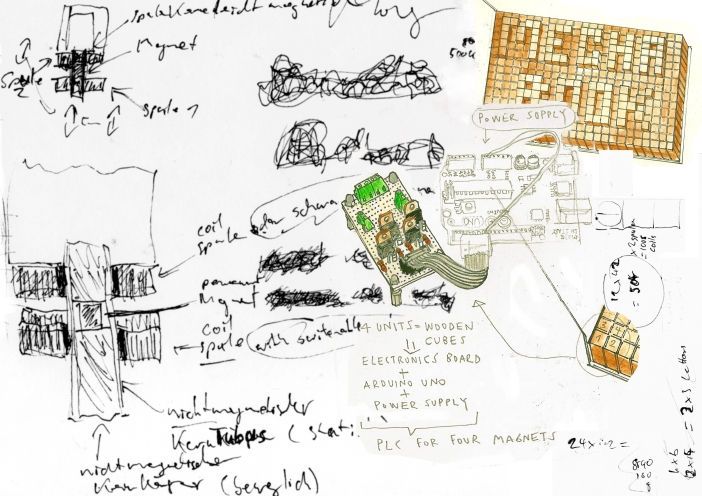
2011 (photos: Sanela Jahic, Sketch:
Doepner/Jahic)
... has
been exhibited in Berlin, Portland and Ljubljana so far.
NanoŠmano - Šmall Matter
Ljubljana, 21. 04. - 30.04. 2011
artistic scientific public lab phase on small scale materials and
effects
Stefan Doepner - Marc Dusseiller - Boštjan Leskovšek - Bengt Sjölén - Erik Reimhult
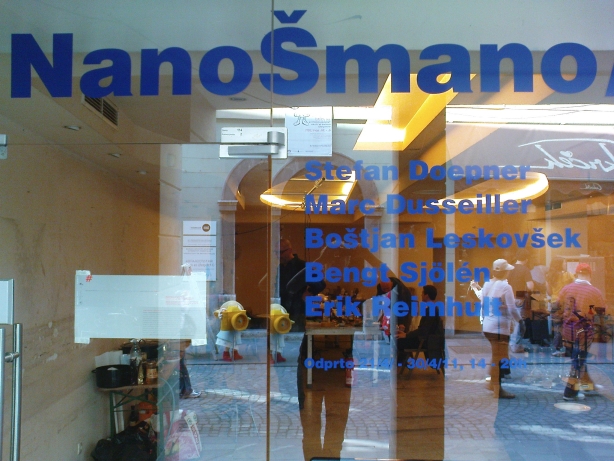
NanoŠmano - Šmall Matter is over...
it was awsome, alive, open, it was hacking and tinkering, researching and engineering,
it was poetic and it was facts, it was kuglica, mavrica, sajeca and glisdice and it was doodoo,
it was also good coffe and tee, talking and eating, breakfast and dinner, pelinkovec and beer
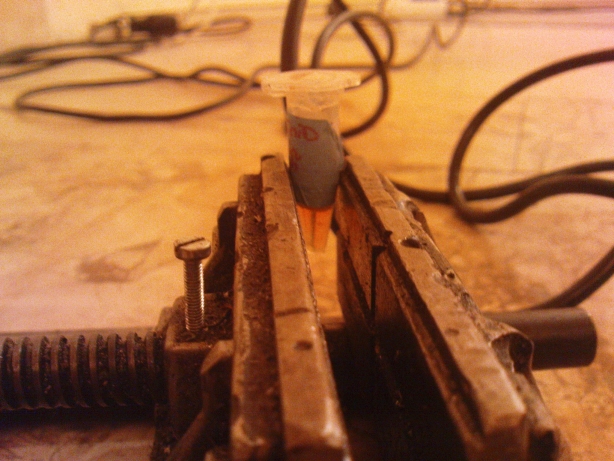
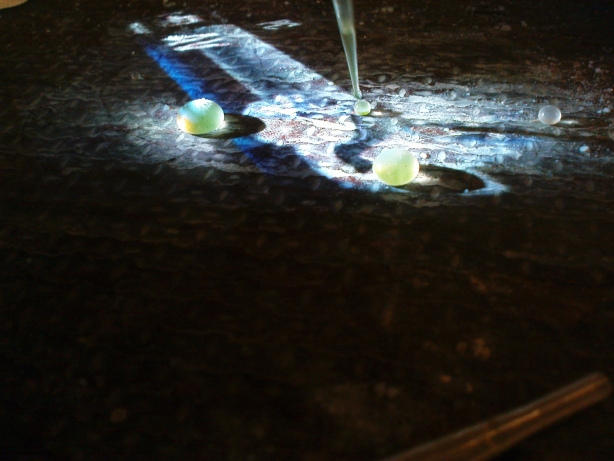
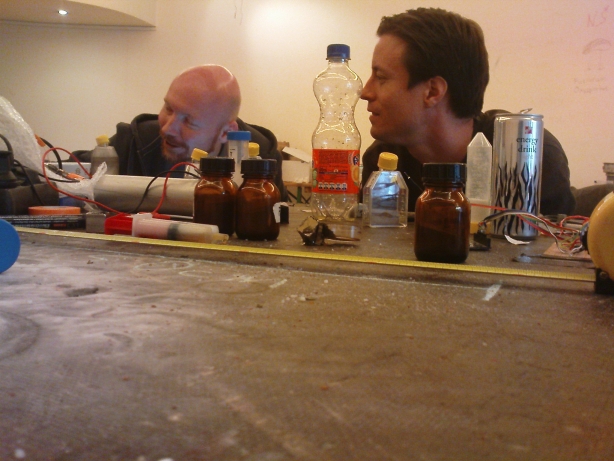
it was:
DIY Spectrophotometer
Fluoresence Microscope
Make it Black!
Pseudo Ferrofluid experiments
Ferrofluid Display
Simple Magnetic Stirrer / Shaker / Spin-coater
NŠ Fungulator
Biosynthesis of Silver Nanoparticles
Hacked Ink-Jet Printer
15% Alcohol Kilju in 28h
Magneto NanoKuglica exciter-stimulator
How to Start a NanoLab
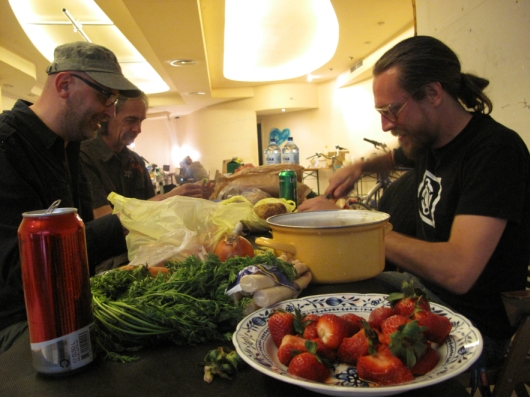
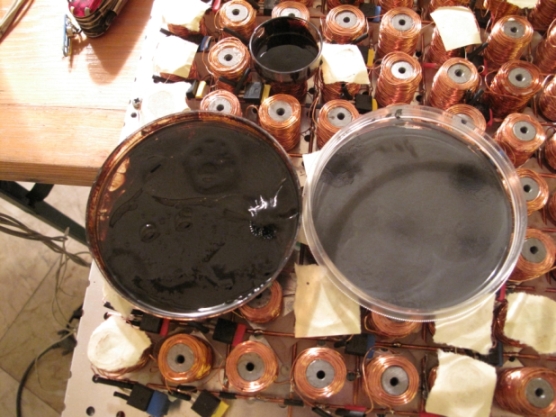
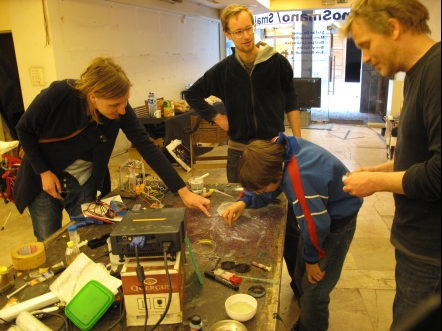
and lots of visitors
thanks to all involved, supporters, visitors, cooperators, friends, kapelica, ljudmila, cirkulacija2...
more soon...
also have a look at www.hackteria.org
In the second edition of NanoŠmano, we are starting new explorations into the world of matter on the
nanoscale by investigating its physical and aesthetic potentials. As an collaborative and open research
based workshop by artists, hackers and scientists, we want to elicit methods to enable the creative use
of nano materials in critical and playful artistic processes.21. 04. - 30.04. 2011
Ljubljana, Mestni trg 15
produced by Galerije Kapelica / Zavoda K6/4 in cooperation with f18institut, Cirkulacija2, Dusjagr in Hackteria
supported by the Ministry for Culture of Slovenia, Cultural department of Ljubljana, Pro Helvetia
http://www.f18institut.org
www.cirkulacija2.org http://www.dusseiller.ch/labs/
http://hackteria.org

Zakljucek in prezentacija: sobota, 30. april 2011, ob 21. uri
V drugi fazi projekta 'NanoSmano' (prva faza je bila z naslovom 'NanoSmano, NanoPunk in hekanje bodocnosti' predstavljena v Galeriji Kapelica septembra 2010) zacenjamo nova raziskovanja fizicnih in estetskih potencialov razlicnih materialov v nanomerilu. Na delavnici, kjer sodelujejo umetniki, hekerji in znanstveniki, zelimo predstaviti moznosti, ki omogocajo kreativno uporabo nanomaterialov v kritiskih in igrivo umetniskih procesih. Delavnica ponuja zanimivo moznost, da se obiskovalci neposredno in izkustveno srecajo z mitologiziranim ter mistificiranim podrocjem nanotehnologij, ki je zapustilo svetisca in bunkerje tehnoloskih laboratorijev, in si ustvarijo obcutek za merilo, ki vse bolj postaja nevidna plast, v katero se ovijajo nasa telesa.
Zacasni laboratorij, prestavljen v staro mestno jedro (Mestni trg 15), smo iztrgali obicajnemu galerijskemu prostoru prav zato, da bi skupinsko raziskovanje priblizali tudi nakljucnim obiskovalcem, saj smo mnenja, da je svet nanomaterialov tema, ki sme in mora zanimati vsakogar.
exhibition:
Küchenmaschinen auf Abwegen
Robot Partners at Cabaret Voltaire, Zürich
by Stefan Doepner
opening: 04.03.2010, 18.00
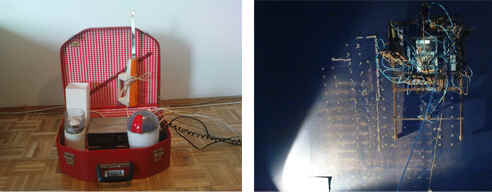
organized by Migros Culture Percentage and Cabaret Voltaire
_________________________________________________________________________________________________
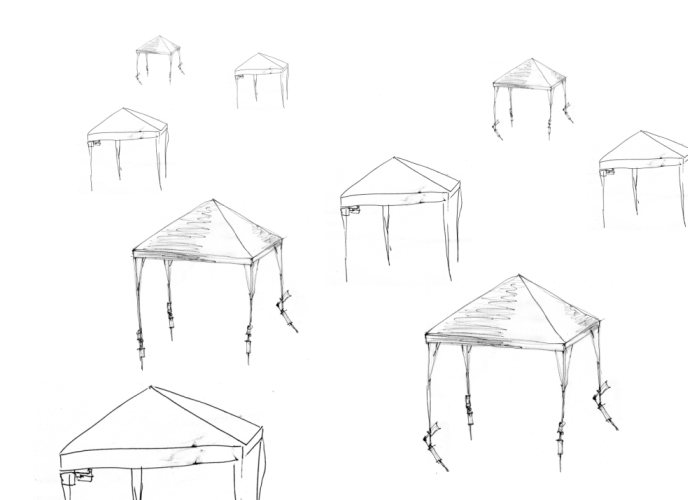
Walking Tent − Robot partner 4.0 produced by Kud
Obrat
Stefan Doepner / f18institut
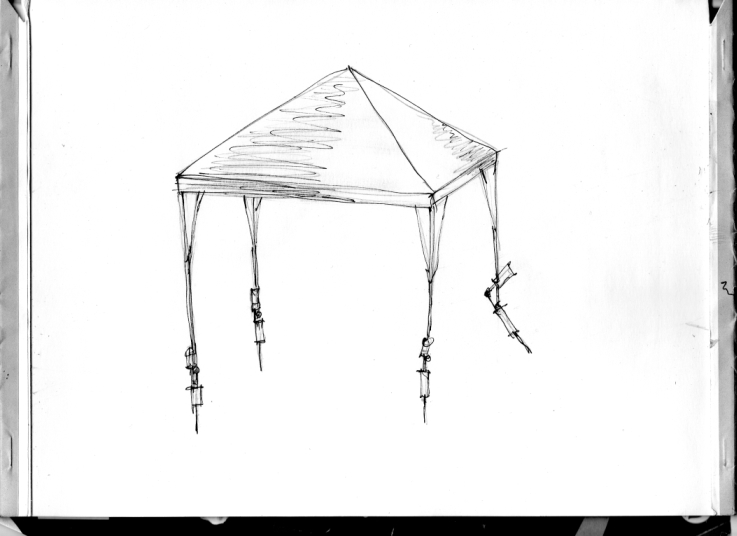
During the 90's these wierd
shelters, roofs on legs, spread more and more in Germany, later they
were rather hidden behind the houses or in the last corner of the garden, one
could see them often when
passing through towns with the train. Slowly they were covered
by green patina ...
Whole time of being an artist, I always was and am living and working
under precarious and temporary circumstances; these wiggly, tipsy, provisional wannabe objects, as this provisional
tent is, put their spell on me.
During the time of working on and discussing ongoing projects regarding
artists and artistic working and presentation space, the idea became more alive again, for me it can represent very
well the position and circumstances of art in reality of business like driven cities and societies.
_________________________________________________________________________________________________
The Hounted House of Nano − Nano-Schmano, nanoPunk
and the hacking of future
(Working title)
Nano is all around
Nano is future, future will be nano
Nano colour, nano structures, nano machines, nano biology
Intelligent dust and elevators to outer space
We are apparently now in a situation where modern technology is
changing the way people behave, people talk, people react, people think
and people remember. And you encounter this not only in a theoretical
way, but when you meet people, when suddenly people start forgeting
things, when suddenly people depend on their gadgets, and other stuff,
to remember certain things. This is the beginning, its just an
experience. But if you think about it and you think about your own
behavior, you suddenly realize that something fundamental is going on.
... It's the question: what is important, what is not important, what is
important to know? Is this information important? Can we still decide
what is important? And it starts with this absolutely normal, everyday
news. (Frank Schirrmacher/Editor FAZ, Germany)
f18institut Ljubljana/Hamburg together with dusjagr labs Zürich will establish an artistic research on nanotechnology, beginning in spring 2010 with their first collaboration.
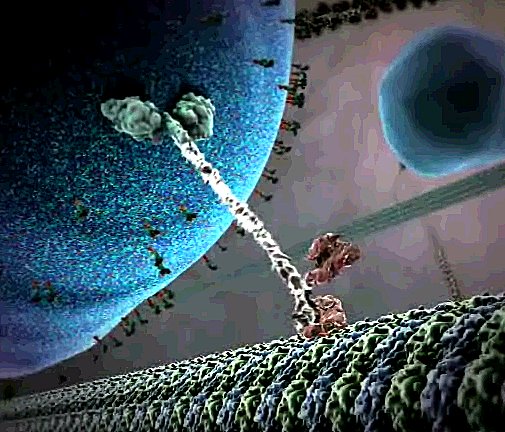
As the field of nanotechnology is far too broad to be investigated as
a whole, we will start with a preliminary project in the field of
nano-biotechnology. While nanotechnology deals with all natural and
artificial phenomena at the lenghtscale of nanometers, only a few atoms,
it is also the meeting point where all modern disciplines merge and have
to find a common language. Allthough a real world experience of this
nanoworld is difficult to achieve and can only be perceived by the use
of modern scientific instruments, logical abstraction and modelling, we
will try to develop possible tools to find, build, sensorize, evaluate,
see and manipulate biological nanostructures, such as motorproteins and
protein-coated nanoparticles. We think that an artistic interpretation
of these allows further insight into this world and produce
experiencable and metaphorical realities of modern science and
technology.
Within the context of a simple approach and DIY philosophy, our tools
will be comparable with knowing 3 chords on a guitar and playing punk
music, one does not really now the whole context − but gathers
experience and examples for new developments − while creating new
artefacts.
The project will kick-off with a project presentation and discussion,
followed by a intensive reasearch, experimentation and production phase
of 10 − 14 days by Doepner and Dusseiller.
We will investigate to create structures, systems and situations with
possible artistic value. It is about basic research on how to work on
simple ways with nanotechnology, accessible to artists in labs and
ateliers, and any more its possibilities for social and artistic value
and relevance. Further on the project will consist of audiovisual and
physical examples of our developments, as well as of self generated and
semi professional tools for biological nano experiments.
Finally we will present an installation, which will represents our research, trials and errors, achievements and critical reflections. The final object should be the [Nano-Schmano] Object, an interactive, nano kinetic light and sound installation, based on Kinesin Motor Proteins and protein-coated nanoparticles, in which the visitor can change and controll through electromagnetic force and light emmissions the patterns and behaviour of those nanostructures.
Their actual activities/reactions will be audiovisually processed and
translated to be observable, audible and graspable.
Appendix:
Motorproteins
Motorproteins are a family of abundant biomolecules that can perform mechanical work. For example as active proton pumps rotary motors in the cellular membrane, the acto-myosin machinery of muscle contraction or the kinesins, which are responsible for transport of material through a cell by "walking" on microtubule filaments. With the merging of biology, robotics and engineering at the nanoscale, scientists have developed hybrid systems that use these biological machinery for engineering applications, such as microscale transport networks, so called NanoShuttles (Vogel V, Hess H, NanoShuttles: Harnessing motor proteins to transport cargo in synthetic environments, Lecture Note Proceedings, Nobel Symposium 131 (2007) 367-383).
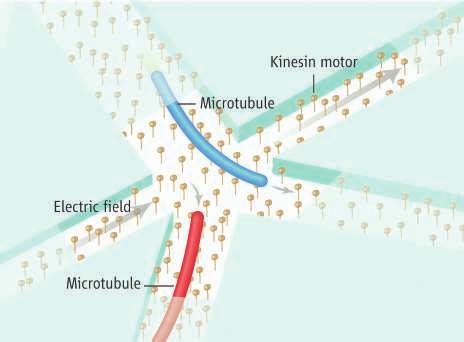
(Image from Hess, H. MATERIALS SCIENCE: Enhanced: Toward Devices Powered
by Biomolecular Motors. Science 312, 860-861(2006). 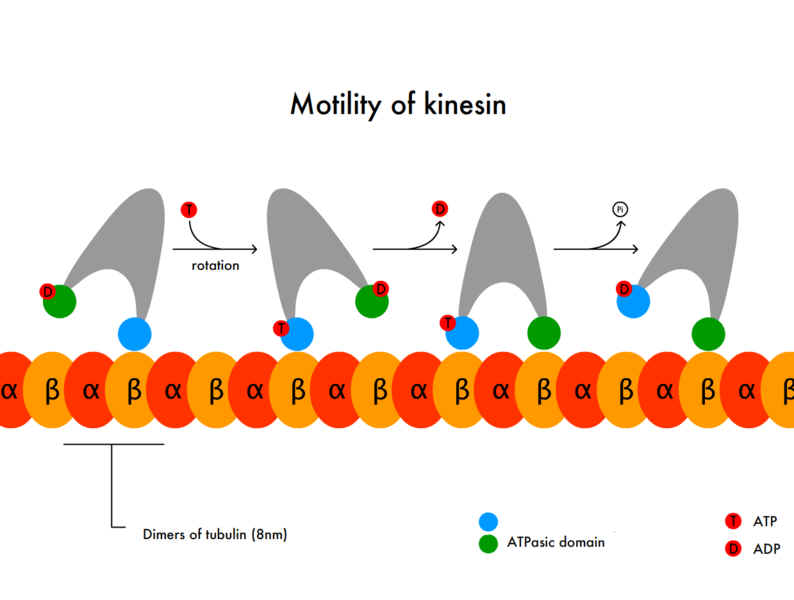
(Image from Wikipedia, the free encyclopedia. at
<http://en.wikipedia.org/wiki/Kinesin>)
Authors:
Stefan Doepner
Dr. Marc Dusseiller
Producer:
f18institut, Ljubljana
dusjagr labs, Zürich
Kapelica Gallery
Kud Obrat
About the authors:
Stefan Doepner studied
Painting and Experimental Film at the University of Arts Bremen.
Doepner's focus is on the artistic exploration of today's use, reception
and rules of technology, to analyze and understand contemporary systems
and techniques he acquires the method of reinvention. In his work
Doepner tries to profane the technological glorification and to grasp
the relations of society, technology, sound, science and every day life
through meditation and mediation.
1992 Doepner participated at the Documenta9 project Van Gogh TV; 1993
co-founded MAB, Bremen; 1995 MediaLab @ sea, Hamburg; 1996 co-founded
f18institut, Hamburg; since 1997 on going collaborations with Stelarc;
2002 artgendaTV within Artgenda Hamburg; 2004 Playground Robotics,
Basel, Bern Solothurn; 2006 participated at Steirischer Herbst, Graz and
Smart 2006, Bremen. 2007 co-founded Cirkulacija2, Ljubljana; 2008
participation at Synthetic Times: Media Art China 2008, Beijing and at
Ars Electronica08, Linz.
www.f18institut.org, www.obrat.org
Marc R. Dusseiller is a transdisciplinary scholar, lecturer for Micro- and Nanotechnology and artist. He works in an integral way to combine science, art and education. He performs DIY-workshops in lo-fi electronics, music and robotics, has made various short movies and is currently developing means to perform biological science (hackteria | open source biological art) in a DIY fashion in your kitchen or your atelier. He is also co-organizing dock18, Room for Mediacultures, and various other engagments like the diy* festival as the president of the Swiss Mechatronic Art Society, SGMK.
http://www.dusseiller.ch/labs, http://www.mechatronicart.ch
About Hackteria/
Hackteria is a collection of Open Source Biological Art Projects
instigated in February 2009 by Andy Gracie (UK), Marc Dusseiller (CH)
and Yashas Shetty (IN). The aim of the project is to develop a rich web
resource for people interested in or developing projects that involve
DIY bioart, open source software and electronic experimentation. As a
community platform hackteria tries to encourage the collaboration of
scientists, hackers and artists to combine their experitise, write
critical and theoretical reflections, share simple instructions to work
with lifescience technologies and cooperate on the organization of
workshops, festival and meetings.
http://hackteria.org/
_________________________________________________________________________________________________
Robot
Partner 3.0
f18institute
Develops Service Robot that Offers Human Task Support
in Offices, Commercial Establishments and at Home
Ljubljana, December 21,
2008 – f18institute
lju. and
f18institute
hh
today announced their joint development
of a service robot that can
provide support for various services in offices, commercial
facilities, and other areas in
which people work, live or spend
leisure time. The newly developed robot features functions that
enable it to provide
such services as detecting and greeting guests,
operating drill machines, drilling holes and measuring
dust and
other emmissions at night and day.
f18institute will develop the robot, with tasks scheduled to begin in June 2009.
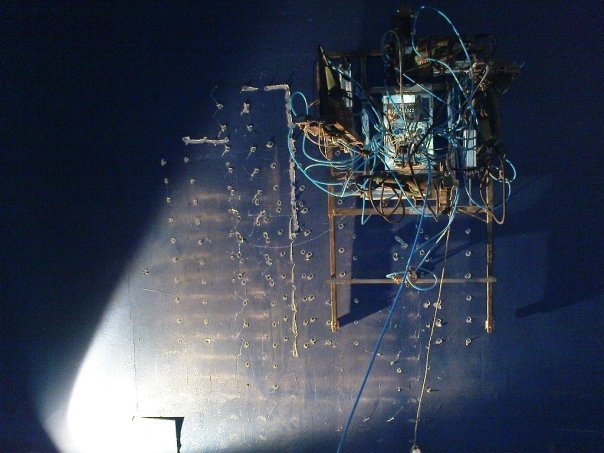
Details of the robot are to be presented at the 3rd Robot-Partner exhibition scheduled to be held on September 15. 2009 at Kapelica Gallery in Ljubljana. There will also be a demonstration of the robot at the 1st Robot-Partner exhibitionin Hamburg.
Video Drillbot - Robot Partner 3.0
There is great anticipation for the application of robots for a wide range of fields such as in medical services, social services, housework, and so on. According to Japan's Ministry of Economy, Trade and Industry (METI), societal expectations are high for robots to contribute to the realization of an enriched society. f18institute Laboratories has been conducting ongoing R&D on robots for practical use, in the quest for robots to support people in their daily lives and make their lives more convenient.
f18institute's past robot offerings include the hexapedal robot Exoskeleton, Motion Prosthesis, Paintbot, Linespiders, Spraybot, PillerPaintbot, Robot Totem, Cellobot and Walking Head. All of which were designed for a broad range of applications for R&D of robot technologies and which are commercially available from f18institute. f18institute also developed Robot-Partner 0.1, a home robot that can be controlled by two touch sensors and the Robot-Partner 2.0, an Automated Table Modificator, which are being sold by f18 on a limited basis.
Building on its past expertise in developing robots for R&D and home-use applications, f18institute went further to the next level by developing a robot that can co-exist with people and provide services in a variety of places such as offices, homes and public facilities.
Newly Developed Robot System
The new service robot is comprised of 4 drill-heads, capable of moving up, down, left, right, forward and backward, up to 7 pneumatic actuators for the movement, a CPU that controls the entire robot, sensors for detecting alive objects, obstacles and airpolution, a 2D visual interface system comprised of a digital signal processor (DSP) and custom hardware.
Key features of the robot are as follows:
1.
Ability to autonomously move
to
a designated location according to a pre-programmed map while
carefully avoiding obstacles. The robot is capable of quickly
perceiving people or things in its surrounding areas while
simultaneously measuring their location, through the use of a IR
sensor and two ultra sonic sensors which can be quickly self-selected
from its eight available sensors as necessary, using the newly
developed sense- and control-software. This processing enables the
robot to detect and avoid obstacles so that it can move safely to a
designated location, thereby making it capable of completing tasks
alongside people.
2.
Ability to climb walls by
drilling holes, react toward voices when called loud, and accomplish
tasks by following the program. The robot is equipped with multiple
microphones that enable detection of a sound source. The robot can
also by ultra sonic system detect people and can react on them
verbally.
3.
Ability to flexibly maneuver
itself within compact spaces, on slopes, over minor surface
gradations, and complete tasks
4.
Natural, easy-to-understand
interface
Future Developments
The robot can connect to the
Internet, search for information according to user request, and
present the information in the method that best fits the situation,
such as by announcing the information, displaying the information on
a display, pointing to information on a separate source, and so on.
Various kinds of Internet services can be provided through the robot
by using its network-related functions.
Self-equipped with a web
server, the robot can be instructed, programmed and remote-controlled
from an external devices such as computers, that do not feature
specific applications for the robot.
Key Specifications
-
Dimensions: 644 mm (width) x 566mm (depth) x 644 mm (height)
-
Weight: 43 kg
-
Mobility of operable parts: Heads: 3 degrees of freedom, Arms: 4 degrees of freedom,
-
Speed: 0.05km/hr
-
Sensors: 2 ultrasonic sensors, 4 proximity sensors, 3 IR sensor
-
User interface: GUI f18/12-0.1, 3 microphones, 1 speaker
- f18, institute, institut, robotik institut hamburg, roboter, robotic, software, electronics, workshops, devellopment, bosshard, rotobossophon, maschinen, systeme
- art, theatre, theater, sound, interfaces, education, robotik, robot, construction, stage control, roboter kunst, roboter, robot, robot art
- mensch und maschine, lernen, kooperation, fehler, mistakes, grobauflösend, rough pixeld, modernistic, invention,
- re-invention, wieder-erfiden, medien, ...exoskeleton, motion prosthesis for stelarc
f18 robotik, f18
robotics, robots, roboter kunst, robot art, Living Rooms - Happy End of the 21st Century Living in a culture of
technology - what does it meen? GAK - SmArt2006 - Bremen - Alltäglichkeit - Alltag - Every day life
- Interface mensch-maschine, f18 institute, robotic, art, kunst, information, technologie,
technik, robotik institut hamburg, oper, the wings of deadalus,software, electronic,
workshops, devellopment, stelarc, motion prosthesis, stelarc exoskeleton, stelarc walking
head, exoskeleton, art, theatre, sound, interfaces, kunst, artgendaTV, Artgenda, streaming
art, internet TV, hamburg, roboter, robot, mensch und maschine, lernen, cooperation,
medien, robots, hamburg germany, slovenia, deuschland, erfindung, slovenia, slowenien,
motion prosthesis, exoskeleton, stelarc, Ljubljana, the wings of deadalus, motion
prosthesis, exoskeleton, Kunst und robotik, Description of work and intentions: Basically
we have a strong interest in teamwork, it creates the most dynamic processes, increases
know how and forces towards self-positioning. Historically we are coming from different
fields of interests, but since long we were working a lot today's technologies, so
artistic interests focused on these fields areas. For to analyse and to understand
contemporary systems and techniques in terms of society and philosophy, we believe it is
necessary to deconstruct and/or rebuild these systems and to face them in a direct way to
the own mind and to the public. In 1996 the free artist Gwendolin Taube, the graduated
engineer Lars Vaupel and the free artist Stefan Doepner founded the Institute for art,
information and technology – f18 in Hamburg. f18 institute is a pool of artists and
technicians, a lab and research centre for the artistic field of today's technologies. One
of focuses is on the development of tools which enable artists to create their own
positions in high tech environments. Since the foundation of f18 the realisation of own
artistic projects as well as commissioned artworks produced an extensive network of
experts in different branches. Based on this we create a platform for to enhance the
exchange and co-operation in art, electronic media, information and technology, so the
products and results of different approaches could be merged into new projects. A further
aspect of work is the human perception of the daily routine, as well as resulting from
this, projections of request. The everyday life is characterised according to its common
meaning by an
partner links: